
Food · 22 min read
Preserving Tomatoes Without Fancy Gear
Freeze them whole, roast a tray into concentrate, or simmer a simple sauce—and leave canning to tested USDA methods with added acid if you want jars on a shelf.
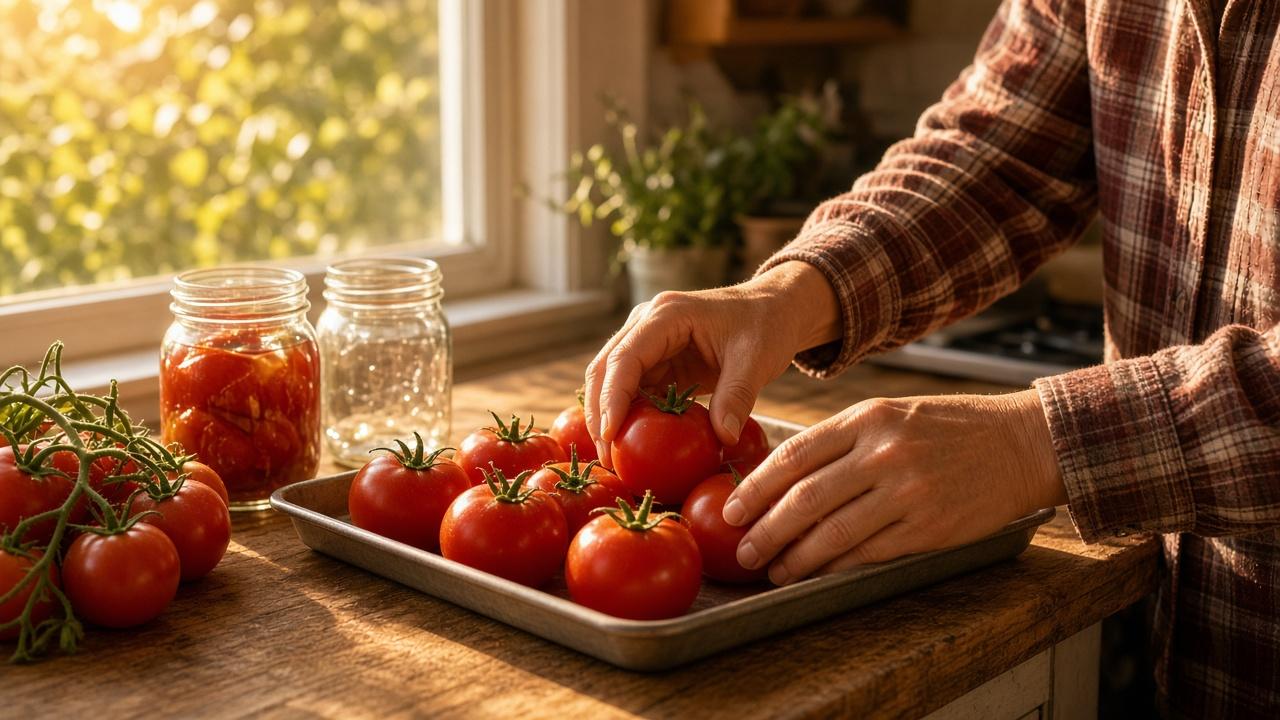
August tomatoes do not wait for you to buy a canner. The no-fancy-gear path is the freezer. It needs bags, trays, and a bit of counter space. Roasting makes a sweeter, denser pack. A pot of sauce is the third trick.
Canning is a different project. Tomatoes sit near the safety line for acidity. If you want shelf-stable jars, you must follow a tested recipe, add acid, and process for the stated time. You cannot invent a roasted-tomato canning method. Oregon State / NCHFP guidance: roasting is not an approved shortcut for canning tomatoes. Freeze roasted tomatoes instead. Acid amounts live here: NCHFP tomato acidification.
This article will get the glut into the freezer safely, then point you at NCHFP if you later want jars.
What you need
- Ripe, firm tomatoes (paste types like Roma pack more flavor per bag; any ripe tomato works)
- Colander, knife, sheet trays
- Zip-top freezer bags or rigid freezer boxes
- Marker for dates
- Optional: pot, olive oil, salt, onions, garlic, blender or food mill
- A freezer with space. Full freezers run more efficiently; leave air around new hot packs until they are cold.
Skip tomatoes from frost-killed vines if you plan to can later. NCHFP warns acidity can change. For freezing, quality is still better from sound fruit.
Method A — Core, tray-freeze, bag (fastest)
From NCHFP freezing tomatoes:
- Wash. Sort out rotten spots—cut those away entirely or compost the fruit.
- Optional peel: dip in boiling water 30–60 seconds until skins split, then ice water, then slip skins. For sauce later, many people freeze with skins and rub them off under the tap while the tomato is still frozen. Both work.
- Core. Leave whole or quarter.
- Spread on a tray in a single layer. Freeze until firm (a couple of hours).
- Bag, press out air, 1-inch headspace if using a rigid container. Label with variety and date.
- Use within a season for best flavor. Frozen tomatoes go soft when thawed; they are for cooking, not sandwiches.
Tip: freeze flat bags. They stack like books and thaw in a skillet faster than a brick.
Method B — Roast into concentrate, then freeze
This is the flavor method. It is not a canning process.
- Heat oven to 300–350°F.
- Halve tomatoes, toss with a little salt and oil, cut side up on a sheet pan. Add garlic if you like.
- Roast until collapsed and sweet, 45–90 minutes depending on size and water content. You want syrupy juices, not charcoal.
- Cool the pan in a sink of cold water so the food comes down through the temperature danger zone quickly. NDSU notes cooling hot tomato products in cold water before freezing: Canning and freezing tomatoes.
- Pack into bags or jars made for freezing, leaving headspace (about 1 inch; more for glass). Freeze.
Use this as pizza sauce, soup base, or thinned with pasta water. Do not park the warm pan in the fridge as a giant covered vat overnight.
Method C — Stovetop sauce, cool, freeze
- Peel if you want a smoother sauce (boil/ice method above).
- Simmer tomatoes with onion and garlic until they thicken, 30–60 minutes. Stir so the bottom does not catch.
- Optional: pass through a food mill.
- Cool the pot in an ice bath, stirring, until lukewarm.
- Portion into containers with headspace. Freeze.
Salt can wait until cooking day if you want flexibility. Oil is fine in a frozen sauce; it may look spotted when thawed—stir it.
If you later want shelf-stable jars
Do not wing it.
- Use NCHFP tomato pages or the USDA Complete Guide.
- Acidify every jar: for quarts, 2 Tbsp bottled lemon juice or 1/2 tsp citric acid; for pints, half that. Vinegar is allowed at higher volume but tastes louder. Table from NCHFP: acidification directions.
- Process in a boiling-water canner or pressure canner for the time in the table for your altitude. A pretty seal without process time is not a process.
- Do not can leftover roasted puree unless the recipe was tested for that exact product (Ball has specific roasted recipes; don’t swap them into other formulas).
If a canned jar looks suspect (unsealed, spurting, off smell): don’t taste it. Follow your extension’s disposal guidance for possible botulism risk.
Quality notes
- Paste tomatoes (Roma, San Marzano types) make thicker frozen packs with less weeping.
- Watery slicing tomatoes are still worth freezing; roast them longer or cook them down.
- Leave headspace. Tomato liquid expands.
- A full freezer of unlabeled bags is how you eat mystery ice in March. Write on the bag while it is dry.
What usually goes wrong
- Hot sauce sealed in a giant tub, then frozen as a warm brick (texture, and a long time in the danger zone)
- Canning roasted tomatoes “because it should be fine”
- Skipping lemon juice in canned tomatoes
- Freezing a tray of tomatoes touching each other into one red boulder (tray-freeze first)
Further reading
- NCHFP: freezing tomatoes
- NCHFP: tomato acidification
- NCHFP: canning tomatoes introduction
- NDSU Extension: canning and freezing tomatoes
- Your state extension food-preservation hotline if you have a “can I can this?” question—the answer is often “only if there’s a tested recipe”
When the freezer has dated flat bags and the counter is clear, you won August. Jars can be next year’s class.
Want more like this? Browse the full Food collection.
Keep building
Fermenting Vegetables at Home: A Reliable Starter Method
Weigh the salt, keep the vegetables under brine, and ferment cabbage or carrots at cool room temperature until they taste pleasantly sour—then refrigerate.
Read more