
Build · 11 min read
Home Defense: Building Secure Perimeters
A practical perimeter plan that layers visibility, barriers, and lighting—without turning your place into a fortress.
Why a perimeter matters
A strong home perimeter is less about fear and more about clarity. You decide who approaches, how they approach, and what they can see. Good design also improves daily life: clearer property edges, safer night walks, and fewer surprises for kids, pets, and guests.
Step 1 — Map the approach paths
Walk your property at dawn and after dark. Note every natural path a person (or animal) would take: driveways, side yards, trail cuts, fence gaps, and dark corners near doors.
Sketch a simple top-down map. Mark:
- Primary entry (front)
- Secondary entries (side/rear)
- Blind spots from the house
- Existing fences, hedges, grades, and lighting
Step 2 — Build layered zones
Think in three rings:
- Outer ring: soft deterrence — hedges, gravel that crunch underfoot, low lighting that reveals movement
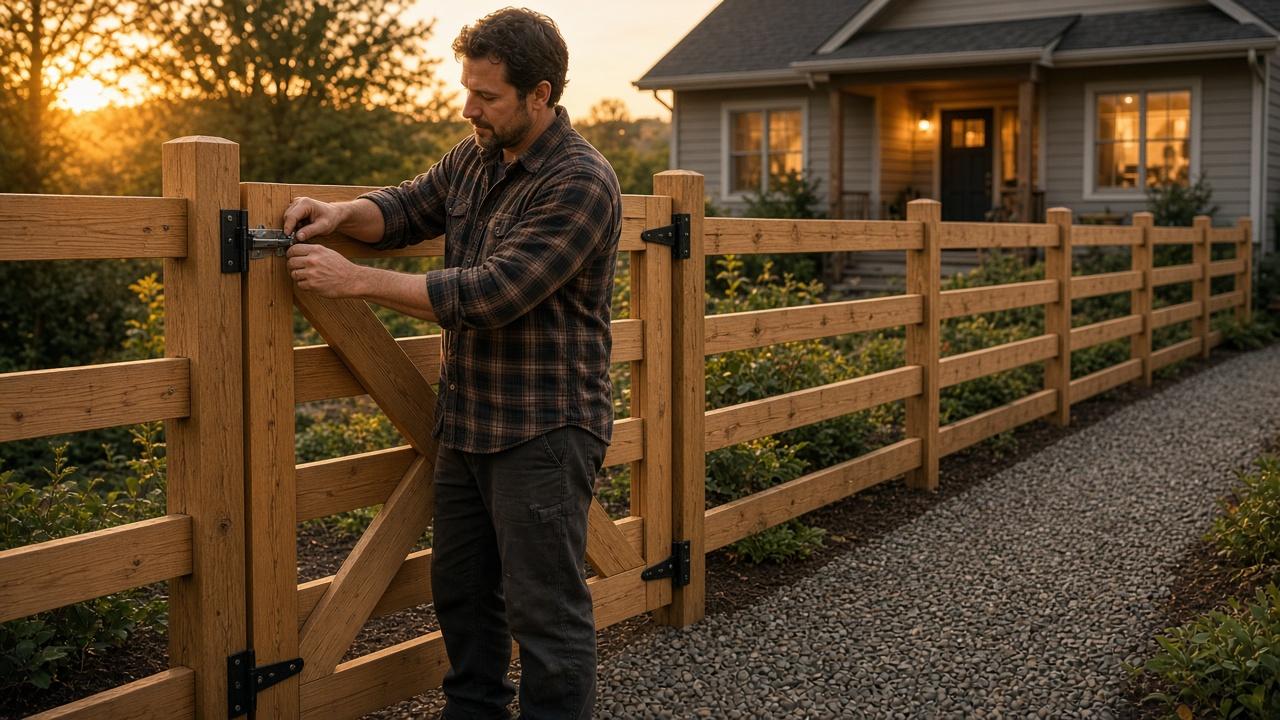
- Middle ring: physical definition — fence, gate, grade change, or dense planting
- Inner ring: hard stop near the structure — locked gates, motion lights, clear sightlines to doors
You do not need all three everywhere. Prioritize the darkest, least visible approaches first.
Step 3 — Choose barriers that fit the land
- Wood privacy fence: fast visual screen; add a top rail and solid posts set in concrete
- Welded wire + wood posts: strong, lower cost, good for rural lots
- Living fence: thorny or dense shrubs along a wire backbone (slow but beautiful)
- Gates: match the fence strength; a weak gate defeats a strong fence
Keep vehicle access intentional. One controlled driveway gate beats three casual openings.
Step 4 — Light for recognition, not glare
Mount warm motion lights 8–10 feet high, aimed slightly downward. Avoid blinding floods that create deeper shadows next door. Add a few always-on path lights so the motion lights feel like a change, not the only visibility.
Step 5 — Maintain sightlines
Trim vegetation that blocks windows and porch cameras. A clear 3–6 foot band along walkways makes movement obvious and keeps maintenance honest.
Checklist before you call it done
- Can you see every door from at least one window or camera angle?
- Does gravel or lighting announce someone on the main path?
- Are gates lockable and hinged correctly?
- Would a guest know where to enter without wandering?
Build the perimeter as a system you will actually maintain. A simple plan you keep sharp beats a dramatic build that fails in year two.
Want more like this? Browse the full Build collection.
Keep building

How to Design and Build a Root Cellar
Use earth temperature and humidity to store crops for months—with ventilation, drainage, and shelving that actually work.
Read more
Rainwater Harvesting for Garden and Shop
Catch roof runoff cleanly, store it safely, and move water to beds and outdoor sinks with a system you can winterize.
Read more
Off-Grid Solar Basics for a Small Cabin or Shop
Size a starter solar system from real loads—panels, charge controller, battery bank, and inverter—without buying mystery kits blindly.
Read more