
Build · 14 min read
How to Design and Build a Root Cellar
Use earth temperature and humidity to store crops for months—with ventilation, drainage, and shelving that actually work.
The idea
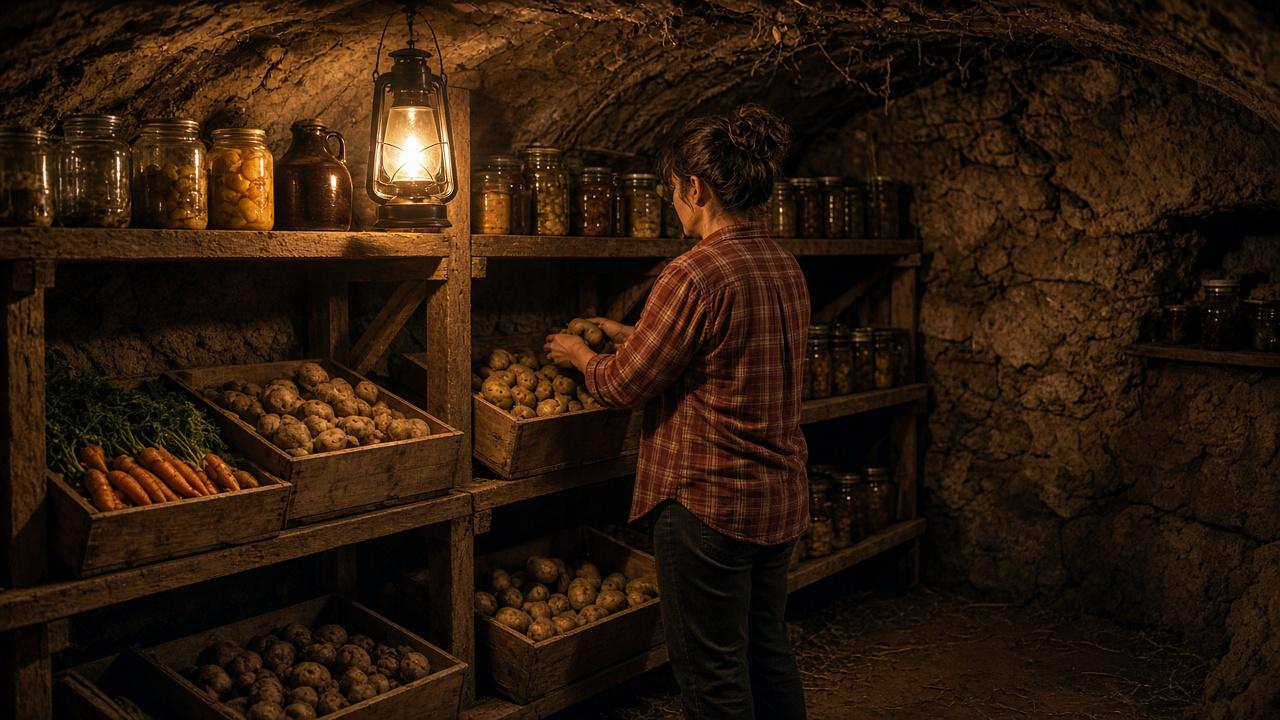
A root cellar borrows the ground’s stable coolness. Done well, it holds potatoes, carrots, cabbage, apples, and canned goods without a refrigerator’s energy bill.
Step 1 — Pick the site
Look for:
- High ground that drains away from the structure
- North-facing shade if possible
- Easy access with a cart from the garden
- No septic, well, or buried utilities conflicts
Step 2 — Choose a form
- Buried box: excavated chamber with insulated door
- Hillside cellar: dug into a bank with a front retaining wall
- Basement corner: insulated room with exterior venting (good starter option)
Hillside builds often balance dig effort and thermal mass best.
Step 3 — Control water
Water ruins cellars. Provide:
- Compacted gravel base
- Perimeter drain to daylight
- Waterproofing on exterior walls
- A slight floor slope to a small drain sump if needed
Step 4 — Ventilate on purpose
Install two vents:
- Low intake
- High exhaust
Use dampers so you can slow airflow in deep winter and increase it during harvest cool-down. Screen openings against rodents.
Step 5 — Shelve by crop needs
- Potatoes and carrots: dark, humid, cool
- Onions and garlic: cooler and drier, often near vents
- Apples: separate from potatoes (ethylene and flavor transfer)
- Jars: sturdy mid-height shelves
Leave air space behind shelves so walls can breathe.
Step 6 — Door and insulation
A solid insulated door with good weatherstripping matters as much as wall thickness. Add a light you will actually replace, plus a thermometer/hygrometer.
Operating tips
Cool the cellar thoroughly before loading fall crops. Cure potatoes and squash before long storage. Check weekly for soft produce and remove it early.
A modest 6×8 cellar that stays dry will outproduce a huge wet hole in the ground.
Want more like this? Browse the full Build collection.
Keep building
Home Defense: Building Secure Perimeters
A practical perimeter plan that layers visibility, barriers, and lighting—without turning your place into a fortress.
Read more
Rainwater Harvesting for Garden and Shop
Catch roof runoff cleanly, store it safely, and move water to beds and outdoor sinks with a system you can winterize.
Read more
Off-Grid Solar Basics for a Small Cabin or Shop
Size a starter solar system from real loads—panels, charge controller, battery bank, and inverter—without buying mystery kits blindly.
Read more